
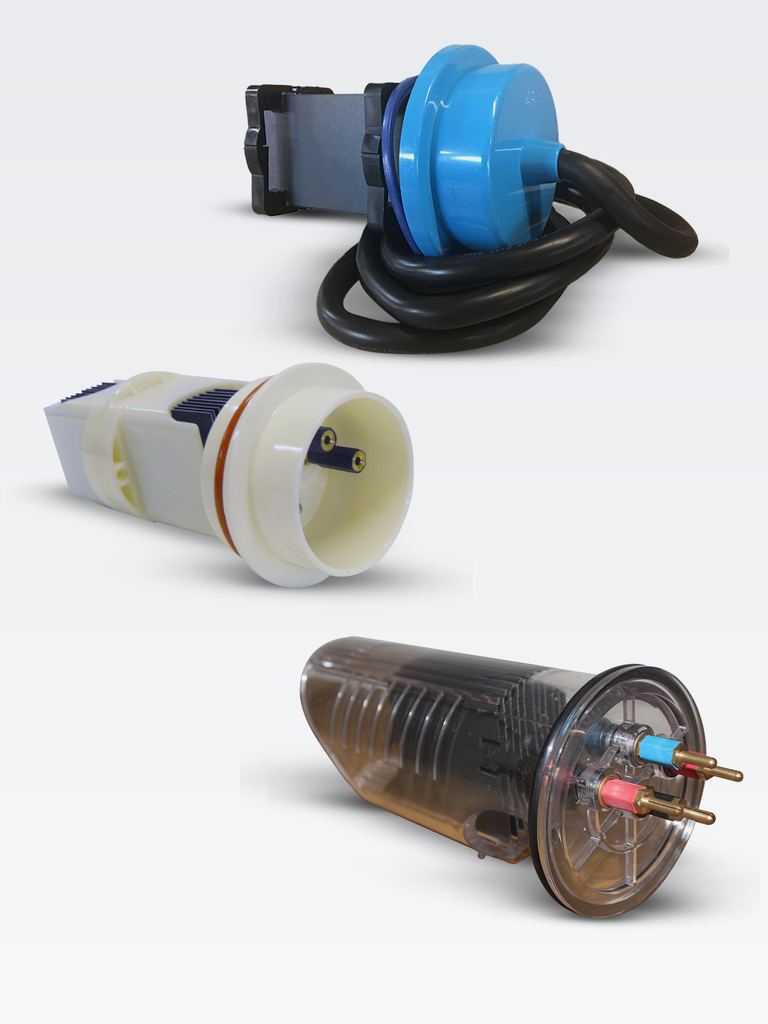
Salt Chlorinator vs Chlorine Pool: 7 Differences, and Where an Ioniser Fits

- Salt chlorinator vs chlorine pool: why both are chlorine pools
- Seven differences in handling, pH, salt, cost and upkeep
- Pool ionizer vs salt chlorinator: an add-on, not a swap
- 1 sanitiser either way: chlorine
- 7 differences in salt chlorinator vs chlorine pool
- 1/7 the salt of sea water, says SPASA
- 3-5 years of cell life, says AstralPool
- 50% less chlorine claimed in pool ionizer vs salt chlorinator
- 1ppm chlorine minimum, salt chlorinator vs chlorine pool alike
Salt Chlorinator vs Chlorine Pool: The Short Answer
Salt chlorinator vs chlorine pool is not a choice between chlorine and no chlorine. A salt pool is a chlorine pool: SPASA says the cell converts the salt into chlorine gas, which "when dissolved in water becomes sodium hypochlorite (liquid chlorine)". The difference is how the chlorine gets into the water.
With a chlorinator it is made on site, on a timer, from salt you add now and then. Without one, you add liquid chlorine, granules or tablets by hand. Each way has costs and chores, set out below. In pool ionizer vs salt chlorinator, the ioniser is a different thing again: the one maker page we read says it must be used with chlorine.
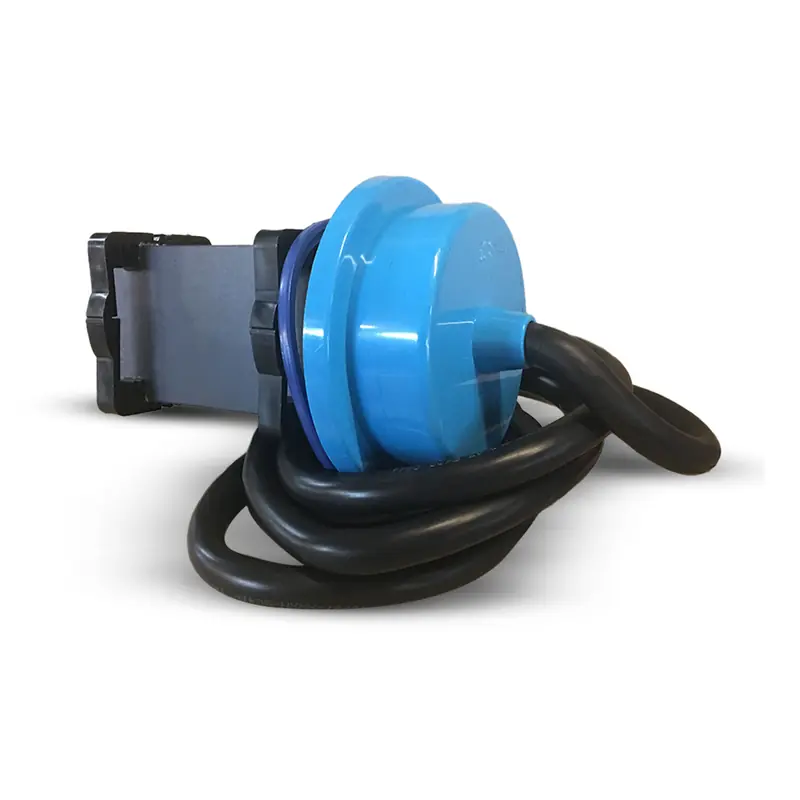
Salt Chlorinator vs Chlorine Pool: Both Are Chlorine Pools
Start here, because most salt chlorinator vs chlorine pool comparisons skip it.
Salt chlorinator vs chlorine pool: salt chlorination is a chlorine method
Queensland Health's water quality guidelines list the approved chlorine-based chemicals: chlorine gas, liquid chlorine (sodium hypochlorite), granular chlorine (calcium and lithium hypochlorite), "electrolytic generation of chlorine from salt (salt chlorination)", and stabilised chlorine granules and tablets. The guidelines are written for public pools, but the chemistry is the same at home.
What chlorine does in the water, salt or not
The same guidelines explain that chlorine added to water forms hypochlorous acid, "a strong disinfectant", and hypochlorite ions, a weaker one. Together they make up free chlorine. How the chlorine arrives does not change that.
So what is the real choice?
In salt chlorinator vs chlorine pool, the real choice is between making chlorine on site and buying it in containers. AstralPool's guide to sanitising pools sets out three ways: liquid chlorine, chlorine tablets and chlorinators. Ionisers are not on its list, which matters for pool ionizer vs salt chlorinator.
Salt Chlorinator vs Chlorine Pool: 7 Differences
Each salt chlorinator vs chlorine pool row is sourced. Where a maker makes a claim in its own favour, we say whose claim it is.
| Difference | Salt chlorinator | Liquid chlorine or tablets |
|---|---|---|
| 1. How chlorine gets in | Made in the cell from dissolved salt while the pump runs | Poured in, or tablets dissolve in the skimmer or a floater |
| 2. Handling | No chlorine containers to handle, AstralPool says | Containers to handle and store, AstralPool says |
| 3. pH | Rises: Kawana says electrolysis makes sodium hydroxide | Liquid chlorine raises it too, AstralPool says |
| 4. Salt | 3,000 to 7,000 ppm for most models, SPASA says | None needed |
| 5. Up-front cost | Higher: AstralPool says the initial investment is higher | No equipment to buy |
| 6. Wearing parts | The cell, roughly 3 to 5 years, AstralPool says | No cell |
| 7. Day-to-day control | Timers and an output setting | Regular testing and dosing by hand |
Sources: SPASA, AstralPool's sanitising and chlorinator guides, and Kawana's K-Chlor manual, read 28 November 2026.
What stays the same in salt chlorinator vs chlorine pool
Both still need stabiliser outdoors, balanced pH and regular testing. Kawana says that without stabiliser the sun "will rapidly deplete the chlorine, regardless of the duration or power level the chlorinator is run at". SPASA adds that a salt pool may still need its chlorine corrected by hand when bather numbers are high, and regular shock dosing.
Where each one fits in salt chlorinator vs chlorine pool
If you want nothing to pour and nothing to store, the chlorinator wins on the makers' own list. If you would rather not own a power pack and a cell that wears, hand dosing has less equipment. Both choices are a salt chlorinator vs chlorine pool trade, not a right and a wrong.
Salt Chlorinator vs Chlorine Pool: Comfort and Safety Claims
This is where makers say the most and test the least. Here is what each one claims, labelled as a claim.
Salt chlorinator vs chlorine pool: the case against hand dosing, from a maker
AstralPool's Viron page says manual dosing with liquid or granular chlorine "can be haphazard", and that over-dosing "can cause eye irritation, itchy skin and a strong chlorine odour". Its chlorinator guide says saltwater pools help to eliminate red eyes, skin irritation and harsh chemical odours. AstralPool sells chlorinators, so read these as a maker's claims.
Salt chlorinator vs chlorine pool: tablets and children
AstralPool's sanitising guide says chlorine tablets are easy to use and store, but carry risks if not handled properly, "such as potential exposure to children and the difficulty in controlling chlorine release rates".
Salt chlorinator vs chlorine pool: liquid chlorine and effort
The same guide calls liquid chlorine effective but labour-intensive, because of the regular monitoring and adjustments it needs, and says it raises pH so acid is needed to balance it.
Salt chlorinator vs chlorine pool: a heater
SPASA warns that with gas or electric heaters and heat pumps, chlorine production must suit the pool or spa, because a heater's internal parts can be damaged by too much salt or chlorine. That is a salt chlorinator vs chlorine pool point that only applies on the salt side.
Salt Chlorinator vs Chlorine Pool: What We Can Say About Cost
We have no running-cost study, so we will not invent one. Here is what is known.
The equipment in salt chlorinator vs chlorine pool
A salt pool needs a chlorinator. We sell the K-Chlor KGS range from $1,904.81 delivered, and the price rises with size. Other brands have their own prices. A chlorine-only pool has no equivalent equipment cost.
The cell: the running cost in salt chlorinator vs chlorine pool
The cell is the part that wears. AstralPool puts its life at "roughly 3-5 years, depending on use" and compares replacing it to changing a car's tyres. Generic replacement cells in our shop start from a few hundred dollars and depend on the model. The cell finder shows yours.
The chemicals, and where a pool ionizer vs salt chlorinator comes in
AstralPool claims that, although a chlorinator costs more to start with, it saves money over time through fewer chemicals. That is the maker's claim, not our test. Salt is not used up by the chlorinator: SPASA says it is lost through backwashing, splash and rain overflow.
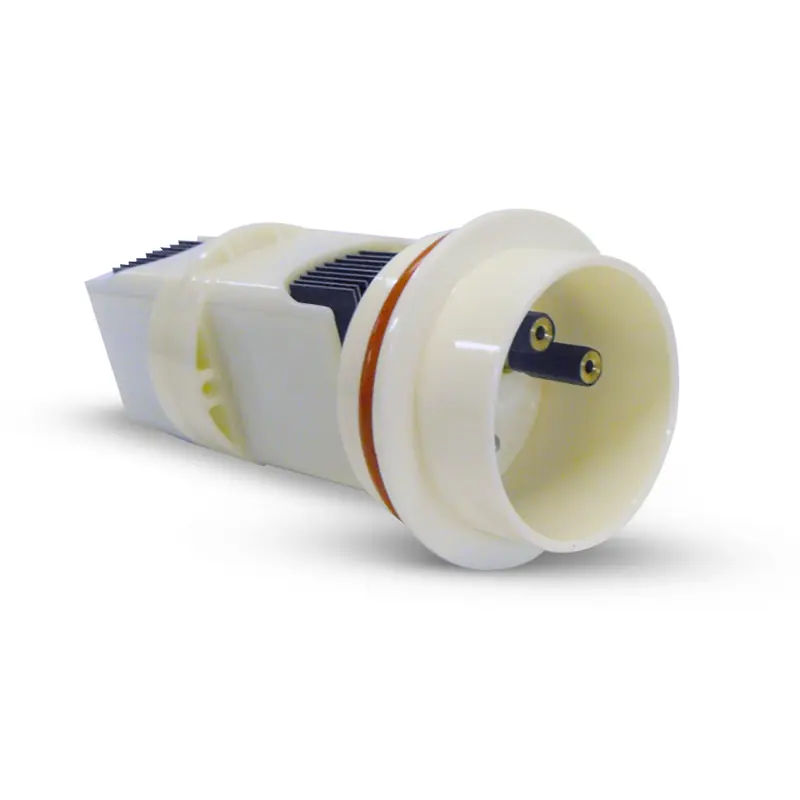
Pool Ionizer vs Salt Chlorinator: An Add-On, Not a Swap
People search pool ionizer vs salt chlorinator as if they compete. The one Australian maker page we read says they do not. Ioniser is the Australian spelling; the search uses ionizer.
Pool ionizer vs salt chlorinator: what an ioniser is
AstralPool's Mineral Guard is a copper and silver ioniser. AstralPool describes it as a secondary sanitiser that needs no power, only water flow, and releases silver against bacteria and copper against algae, with a cartridge replaced every 6 months.
Pool ionizer vs salt chlorinator: the ioniser needs chlorine
AstralPool's page says Mineral Guard "MUST be used with a primary sanitiser such as chlorine or with a saltwater chlorinator". So in pool ionizer vs salt chlorinator, the ioniser sits beside the chlorinator, not in place of it.
Pool ionizer vs salt chlorinator: the 50% claim
AstralPool says Mineral Guard reduces chlorine use by 50%, and notes that Australian standards recommend never using less than 1 ppm of chlorine. That is AstralPool's claim for its own product. We have not tested it, and we do not sell ionisers.
Pool ionizer vs salt chlorinator: two cautions
AstralPool says not to use Mineral Guard with copper-based algaecides or soda ash products. It also claims that, unlike all other ionisers, Mineral Guard is guaranteed not to stain and needs no copper testing. That claim is about its own product, and it tells you staining and copper testing are questions to ask about any other ioniser.
| Ioniser (AstralPool Mineral Guard) | Salt chlorinator | |
|---|---|---|
| Role | Secondary sanitiser, must be used with chlorine | Makes the chlorine itself |
| What it uses | Copper and silver ions | Dissolved salt and electricity |
| Power | None, only water flow | Mains power through a power pack |
| Part to replace | A cartridge every 6 months | The cell, roughly every 3 to 5 years |
From AstralPool's Mineral Guard page and its chlorinator guide. Other ionisers may work differently, so read the maker's page for the one you are offered. That is the honest answer to pool ionizer vs salt chlorinator.
Salt Chlorinator vs Chlorine Pool vs Mineral Pool
A mineral pool is a third answer to salt chlorinator vs chlorine pool, and it still uses chlorine.
What changes in a mineral pool
The chlorinator runs on a mineral blend instead of plain pool salt. Zodiac lists its MagnaPool Minerals as a sodium-free blend of 30% magnesium chloride and 70% potassium chloride, made to run with its own Hydroxinator. Kawana rates the K-Chlor KGS at 3,500 to 4,000 ppm on mineral salts. For a mineral pool, the salt chlorinator vs chlorine pool trade-offs above still apply, because a cell still makes the chlorine.
Not the same as an ioniser
A mineral pool's magnesium and potassium are not an ioniser's copper and silver. That is a separate pool ionizer vs salt chlorinator question, covered above. Our mineral pool chlorinator guide lists the units rated for mineral blends.
Switching From Chlorine to a Salt Chlorinator
If salt chlorinator vs chlorine pool comes out in favour of salt, these are the steps the makers give.
Salt chlorinator vs chlorine pool decided: size the chlorinator
Kawana sizes its KGS units at 1 gram an hour for every 2,000 litres, so 50,000 litres needs about 25 grams an hour. Our best pool chlorinator comparison shows other makers' sizes by climate, and for a hot, dry summer our pool chlorinator Perth guide sizes on the warmer figure.
Kawana K-Chlor pageHave it installed
The makers' manuals say a qualified person must do the electrical work. Our installation guide covers the rest.
AstralPool, Zodiac and Kawana manualsAdd the salt
Pool Controls gives 4 kg of salt per 1,000 litres to reach 4,000 ppm. Add it at the shallow end, keep it out of the skimmer, and let it dissolve before the chlorinator runs.
Pool Controls SG manual, AstralPool manualsBalance the water
Keep stabiliser and pH in range. Pool Controls asks for stabiliser at 50 ppm outdoors, and says too much, over 80 ppm, makes chlorine less effective. If the water goes cloudy while it settles, our pool clarifier vs pool flocculant guide covers clearing it.
Pool Controls SG manual
| Model | Pool up to | Price |
|---|---|---|
| KGS 15 | 30,000 L | $1,904.81 |
| KGS 20 | 40,000 L | $2,114.36 |
| KGS 25 | 50,000 L | $2,307.15 |
| KGS 30 | 60,000 L | $2,489.45 |
| KGS 35 | 70,000 L | $2,841.50 |
| KGS 50 | 100,000 L | $3,665.03 |
| KGS 75 | 150,000 L | $5,467.16 |
| KGS 100 | 200,000 L | $6,586.16 |
Pool sizes by Kawana's rule of 1 gram per 2,000 litres. Prices include GST and delivery.
Salt Chlorinator vs Chlorine Pool FAQs
Short answers on salt chlorinator vs chlorine pool and pool ionizer vs salt chlorinator.
Is a salt pool still a chlorine pool?
Yes, which is the first point in salt chlorinator vs chlorine pool. The chlorinator turns the salt into chlorine. SPASA says that chlorine, dissolved in water, becomes sodium hypochlorite, which is liquid chlorine.
Salt chlorinator vs chlorine pool: which is cheaper?
A chlorinator costs more up front and its cell wears out. AstralPool claims it saves money over time through fewer chemicals. We have not run a cost study, so we cannot give a figure.
Salt chlorinator vs chlorine pool: which needs less handling?
AstralPool says a chlorinator removes the need to handle liquid chlorine or tablets. A salt pool still needs salt top-ups and acid for pH.
Does a salt chlorinator raise pH?
Yes. Kawana says electrolysis of brine makes chlorine and sodium hydroxide, which raises pH. AstralPool says liquid chlorine raises pH too.
Pool ionizer vs salt chlorinator: can an ioniser replace a chlorinator?
Not according to AstralPool, whose Mineral Guard ioniser must be used with a primary sanitiser such as chlorine or a saltwater chlorinator.
Pool ionizer vs salt chlorinator: can I use both?
Yes, if the maker allows it. AstralPool sells Mineral Guard to be used with chlorine or a saltwater chlorinator, and says not to use it with copper-based algaecides or soda ash.
Pool ionizer vs salt chlorinator: which uses power?
AstralPool says its Mineral Guard ioniser needs no power, only water flow. A salt chlorinator runs on mains power through its power pack.
Pool ionizer vs salt chlorinator: what needs replacing?
AstralPool says the Mineral Guard cartridge is replaced every 6 months. A chlorinator cell lasts roughly 3 to 5 years, AstralPool says.
Pool ionizer vs salt chlorinator: does an ioniser stain?
AstralPool claims its own Mineral Guard is guaranteed not to stain and needs no copper testing, unlike other ionisers. Ask the maker of any other ioniser the same question.
Salt chlorinator vs chlorine pool: which is gentler on skin?
AstralPool claims saltwater pools help eliminate red eyes, skin irritation and harsh chemical odours, and that over-dosing by hand can cause them. That is a maker's claim, not a test we ran.
Salt chlorinator vs chlorine pool: does a heater matter?
SPASA warns that a heater's internal parts can be damaged by too much salt or chlorine, so chlorine production must suit the pool or spa.
Pool ionizer vs salt chlorinator: which comes first?
The primary sanitiser. AstralPool says its ioniser must be used with chlorine or a saltwater chlorinator, so the chlorine or the chlorinator comes first.
Pool ionizer vs salt chlorinator: is a mineral pool an ioniser?
No. A mineral pool runs a chlorinator on mineral salts such as magnesium and potassium chloride. An ioniser like AstralPool Mineral Guard releases copper and silver ions.
How much salt does a salt pool need?
SPASA says most models need 3,000 to 7,000 ppm, about one seventh of sea water. Check your chlorinator's manual for its figure.
Do I still need stabiliser with a chlorinator?
Yes, outdoors. Kawana says stabiliser is essential to stop the sun depleting the chlorine.
Sources We Checked
Salt chlorinator vs chlorine pool and pool ionizer vs salt chlorinator: the sources, all read on 28 November 2026, Brisbane time.
- SPASA, Salt Chlorinators
- Queensland Health, Water quality guidelines for public aquatic facilities
- AstralPool: How to sanitise pool water effectively and What is a saltwater chlorinator?
- AstralPool, Mineral Guard ioniser: the pool ionizer vs salt chlorinator facts
- Zodiac, MagnaPool Minerals: the mineral blend
- Kawana: K-Chlor Digital manual and K-Chlor page
- Pool Controls SG Series manual: salt and stabiliser
Weighing up salt chlorinator vs chlorine pool, or pool ionizer vs salt chlorinator, for your own pool? Email the pool size and where you live to info@chlorinatorcells.au, or call 07 3485 0008, and we will tell you what size a K-Chlor KGS would be.