
How Does a Chlorinator Work? 7 Plain Answers From the Makers

- How does a chlorinator work? Four steps you can picture
- How does a pool chlorinator work day to day? Timers, output and boost
- How does a chlorinator work for years? What the cell needs, and why it wears
- 4 steps answer how does a chlorinator work
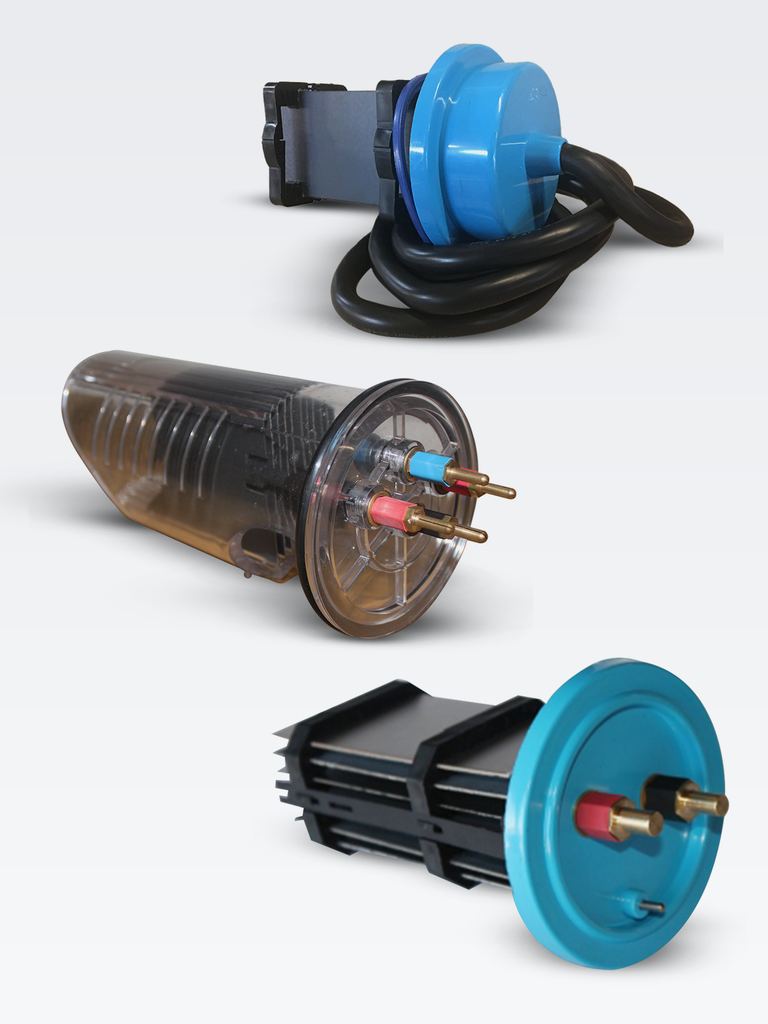
- 3 parts: controller, cell and cable
- 1/7 of sea water's salt, says SPASA
- 12hrs between polarity reversals on a K-Chlor
- 7.4 to 7.6 is the pH Kawana asks for
- 3-5 years of cell life, says AstralPool
How Does a Chlorinator Work? The Short Answer
How does a chlorinator work? You dissolve salt in the pool. As the pump pushes that water through the cell, electricity passes between coated plates and turns the chloride in the salt into chlorine. SPASA, the pool industry body, puts it plainly: "you are in fact producing your own chlorine".
How does a pool chlorinator work from day to day? A controller on the wall sets how hard and how long the cell runs. You still test the water and keep the salt, pH and stabiliser right. The cell slowly wears, which is where we come in: we sell replacement cells.
How Does a Chlorinator Work? Four Steps
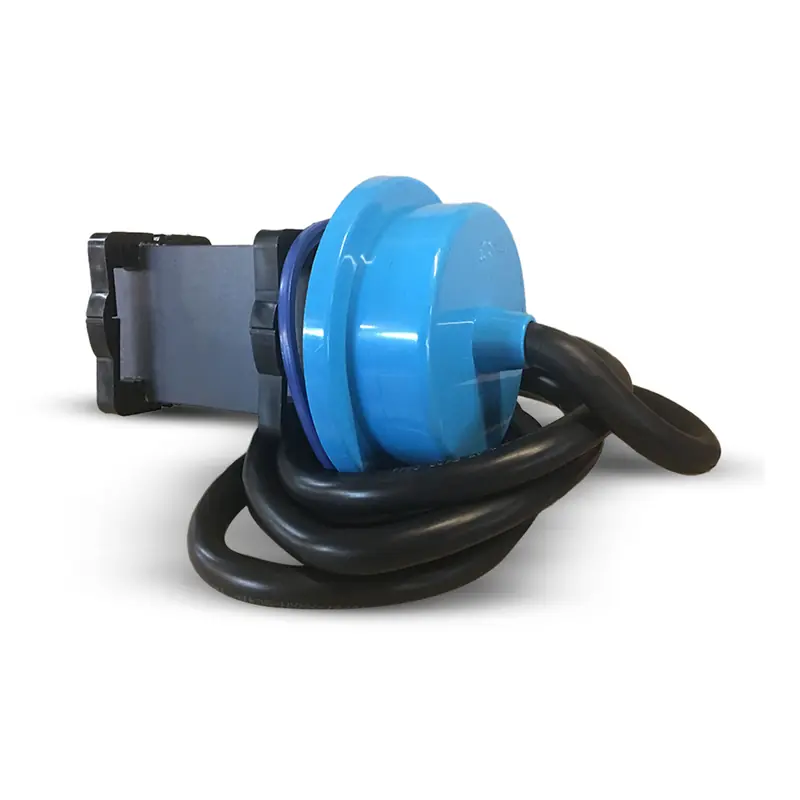
How does a chlorinator work? The industry body and the makers all describe the same four steps.
Salt goes into the pool
AstralPool describes "adding a small amount of salt (sodium chloride) to your pool water". SPASA says most models need a weak solution of 0.3% to 0.7%, which is 3,000 to 7,000 ppm and "about one seventh the level of salt in sea water".
AstralPool guide, SPASAThe pump sends salt water through the cell
SPASA: the process works by "passing the salt water solution through an electrolytic cell". No flow, no chlorine: AstralPool says the unit "needs a sufficient flow of water" to work.
SPASAElectricity turns chloride into chlorine
The cell "converts sodium chloride (salt) in the water into chlorine gas which, when dissolved in water becomes sodium hypochlorite (liquid chlorine)". Kawana's manual calls this "the electrolysis of brine".
SPASA, Kawana K-Chlor manualChlorinated water returns to the pool
AstralPool's VX manual puts the cell "last in the pipe work just prior to the return to the pool". Queensland Health explains what the chlorine does next: in water it forms hypochlorous acid, "a strong disinfectant", and hypochlorite ions.
AstralPool VX manual, Queensland Health
How does a chlorinator work without anyone adding chlorine?
It makes its own. AstralPool's guide says its chlorinators create their own chlorine, so you do not add it by hand. There is one exception. SPASA notes that during periods of high bather load "it may be necessary to manually correct chlorine levels".
How does a pool chlorinator work with so little salt?
AstralPool says the cell needs "a certain amount of salt in the water" to make chlorine, and that the level is "so low it is almost undetectable to taste". The exact figure depends on the unit, so SPASA's advice is to follow the manufacturer's recommendation strictly.
How does a pool chlorinator work while the salt is still dissolving?
It should not be asked to. AstralPool's E Series manual is blunt: "Do not initiate electrolysis until salt has fully dissolved." It also says not to add salt directly into the skimmer.
How Does a Pool Chlorinator Work Inside? Three Parts
How does a chlorinator work as a system? AstralPool names three primary components, and each has one job.
The controller
The box on the wall. AstralPool says the control board "allows you to control the level of chlorine in the pool". SPASA adds that some units come with time clocks.
The cell
SPASA describes a plastic housing containing the electrodes, an anode and a cathode, made from or coated with metals such as platinum and titanium.
The cell cable
The lead that connects the cell to the power supply. Kawana warns that loose or corroded connections "generate a large amount of heat".
How does a chlorinator work with its controller?
The VX manual splits its panel into five areas: a clock and timers, chlorine output controls, warnings for no flow and low salt, a user mode for manual control, and a display of the chlorine being produced. Output on a VX is set from level 1 to level 8.
How does a pool chlorinator work with the pump?
On a VX the timers set the periods "in which your chlorinator/pump will operate", so one clock runs both. When it starts the pump it checks for water flow. If none is detected within 3 minutes it turns the pump off, to protect the pump seal.
How does a chlorinator work when a part wears out?
With a new part. The cell is the part with a limited lifespan, AstralPool says, so it is the one you expect to replace. Our pool chlorinator repair guide covers how to tell a worn cell from a power pack fault.
How Does a Chlorinator Work at the Cell?
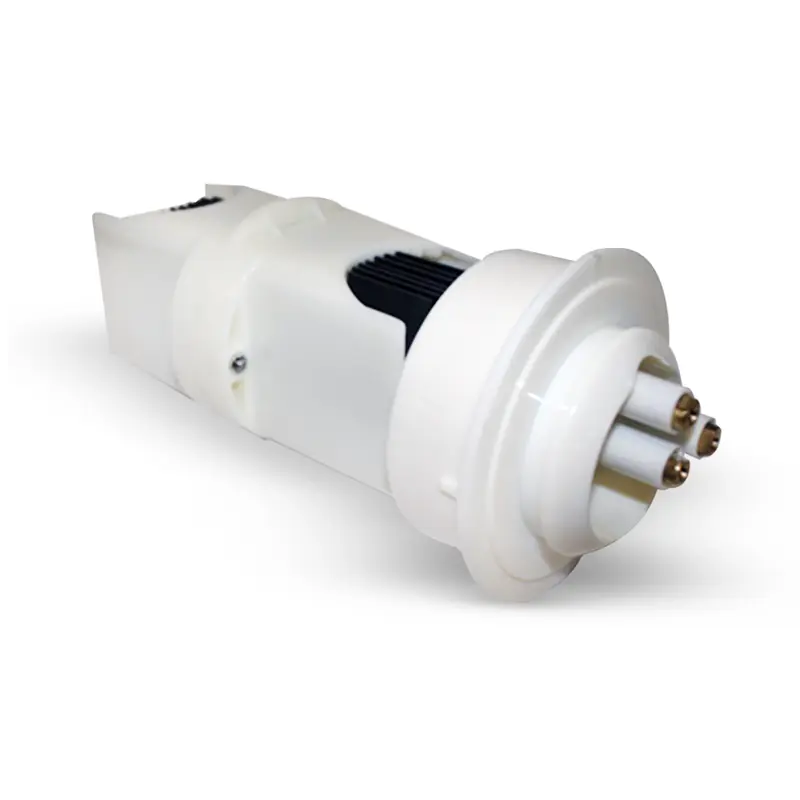
The cell is where the chemistry happens. How does a pool chlorinator work at that point? By electrolysis.
How does a chlorinator work by electrolysis? The maker's words
Kawana's K-Chlor manual says: "Saltwater chlorination is achieved by the electrolysis of brine, which creates both chlorine and sodium hydroxide (caustic soda)." The sodium hydroxide raises the pH, which is why the same manual tells owners to check pH once a week.
How does a chlorinator work without scaling up?
It does scale. SPASA says most cells need cleaning now and then, "to remove calcium deposits which build up on the electrodes as a result of the electrolysis process", usually by soaking the electrodes in a weak acid solution. Our salt cell cleaner guide has the makers' mix.
How does a pool chlorinator work when it is self-cleaning?
It swaps the direction of the current. Kawana says its cell is coated on both sides so it can work in forward or reverse: 12 hours one way, then 12 hours the other. Each change of direction "assists in cleaning the calcium from the plates". A Zodiac TRi-XO shows Cell Cleaning while it does the same, and its manual says there is nothing to do.
How does a pool chlorinator work between cleans?
It keeps running, but look at it. AstralPool's troubleshooting guide says to check a non-reversing cell every fortnight in peak season, and a self-cleaning one every 3 to 4 weeks.
How Does a Chlorinator Work Best? The Water It Needs
A cell can only convert what is in the water. How does a pool chlorinator work at its best? With these five things right.
| Factor | What the sources say |
|---|---|
| Salt | AstralPool and Zodiac recommend 4,000 ppm for the units we read about. Kawana's K-Chlor Digital comes in 4,000 and 6,000 ppm models. Use your own unit's figure. |
| pH | Kawana asks for 7.4 to 7.6 and says that "under 6.8 and over 8.0, chlorine production is less effective". Queensland Health: if pH is too high, free chlorine "will lose most of its disinfection power". |
| Stabiliser | Kawana: without it the sun's UV rays "will rapidly deplete the chlorine, regardless of the duration or power level". SPASA suggests about 30 to 50 ppm. |
| Flow | AstralPool: the unit "needs a sufficient flow of water". Clogged baskets, dirty filters or closed valves reduce it, and with no flow the sensor shuts off the cell and pump. |
| Temperature | AstralPool: "The colder the water, the higher the salt level needs to be." Zodiac: below 21°C, check the salinity before adding salt. |
Sources for how does a chlorinator work best: Kawana K-Chlor manual, SPASA, AstralPool's troubleshooting guide, Zodiac's TRi-XO manual and Queensland Health's water quality guidelines, which are written for public pools.
How does a chlorinator work in winter?
Less, by design. Zodiac's manual says that in winter it may only be necessary to run the filtration system for 4 hours a day, and that shorter periods "will lengthen the life of" the electrode. AstralPool says newer units can regulate output in cold water automatically, to prevent excessive wear on the cell.
How does a pool chlorinator work in a heatwave?
It has to run for longer. AstralPool's troubleshooting guide says that "during a hot summer day, the chlorine levels can even drop by up to 90%", and tells owners to check free chlorine once a week and adjust. Zodiac suggests about 8 hours a day in the swimming season and up to 10 in very hot weather.
How Does a Pool Chlorinator Work Day to Day?
How does a chlorinator work through a normal week? Mostly without you. How does a pool chlorinator work when things change? With a button press.
How does a chlorinator work with timers?
A VX timer model has 4 timers and a TRi-XO has two. AstralPool recommends a morning and an evening period, typically 2 to 5 hours each, because the unit "is most effective if running in the early morning or evening when it is cooler (strong sunlight consumes more chlorine)". A VX leaves the factory set to 08:00 and 16:00 for 4 hours each.
How does a chlorinator work best by time of day?
In the cool. Zodiac gives the same advice as AstralPool: "set the unit to operate during the cooler hours of the early morning, evening or when swimmers are using the pool".
How does a pool chlorinator work out how much chlorine to make?
On a VX or a K-Chlor it does not. You set it. AstralPool says production "can be controlled to suit your pool size and the bather demand", and that you should still test the water regularly. Kawana says that with the water balanced you should be able to run the K-Chlor at 100% output.
How does a chlorinator work after a party or a storm?
With a boost. Zodiac's Boost mode overrides the settings and runs the cell for 24 hours at 100%. Kawana's SuperChlor mode does the same for 24 hours at the highest possible output. SPASA adds that regular superchlorination or shock dosing should still be carried out.
How does a pool chlorinator work while you are away?
On its timers. Kawana built the K-Chlor to keep going unattended: with very high salt it drops to a lower power setting "rather than shutting down altogether", and after a Pump Fail it waits an hour and tries again.
How does a pool chlorinator work with a cover or a spa?
Turned right down. Zodiac says a covered pool should be set to Low, also called winter mode, which drops output to around 10% and helps prevent damage to the cover. A K-Chlor has a Spa mode at 10%, and a VX in Spa mode runs at level 1. SPASA warns that heaters can be damaged by excessive salt or chlorine levels, so output must suit the spa or the pool.
How Does a Chlorinator Work for Years? The Cell Wears
How does a chlorinator work year after year? The power pack carries on, and the cell is replaced.
How does a chlorinator work for 3 to 5 years? Cell life
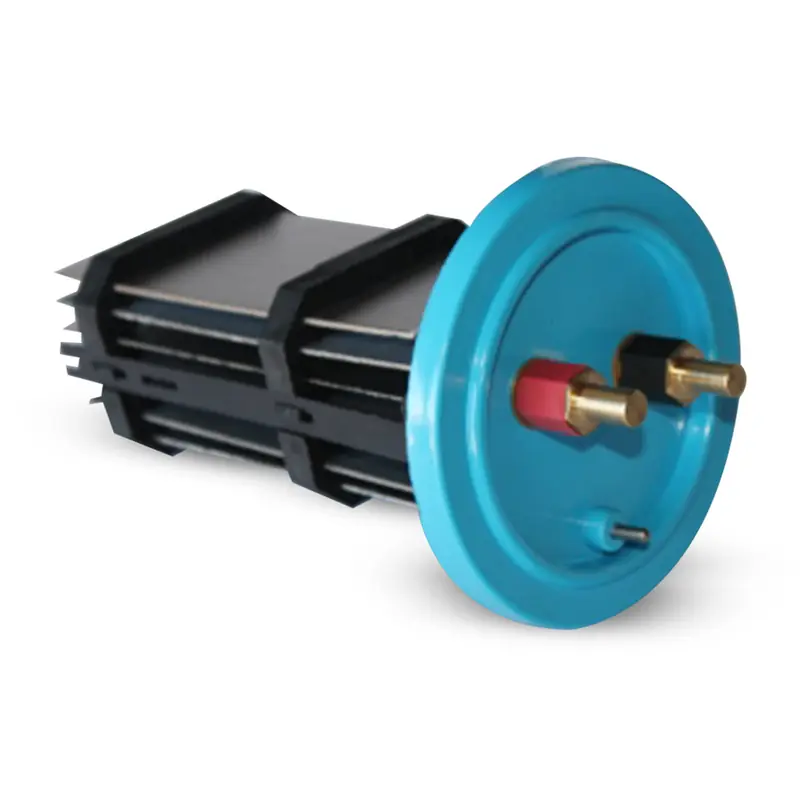
AstralPool's guide says the salt cell "does have a limited lifespan (roughly 3-5 years, depending on use)", and compares replacing it to changing tyres on a car. Its troubleshooting guide puts it in hours: "most cells have between 10,000 and 20,000 hours operation".
How does a chlorinator work as the cell coating wears?
With less output. Kawana's manual: "Production levels may decrease over the years as the coating on the electrode wears." When that happens it says you may have to run the chlorinator for longer to keep the chlorine level up.
How does a pool chlorinator work once the cell is worn?
Poorly. AstralPool says a low salt or no flow warning can be a sign the cell is reaching the end of its working life, and a Zodiac TRi-XO shows Check Cell.
| For this chlorinator | Our generic cell | Price, delivered |
|---|---|---|
| AstralPool E25 and VX 6 | E25 and VX 6 replacement cell | $599.93 |
| Zodiac TRi, mid size | TRi Mid replacement electrode | $858.73 |
| Kawana K-Chlor KGS 25 | KGS 25 replacement cell | $1,056.00 |
Generic cells made by Kawana Chlorinator Spares, not by AstralPool or Zodiac. Prices include GST and delivery. The cell finder covers the other brands.
How Does a Chlorinator Work on a Bigger Pool? Sizing
How does a pool chlorinator work on 80,000 litres as well as 30,000? It needs a bigger cell and more grams an hour.
How does a pool chlorinator work for a big, busy pool?
By being sized for it. SPASA lists four things that decide the size: the size of the pool, the bathing load, the size of the filtration system and the summer water temperature, because "high temperatures and strong sunlight cause faster loss of available chlorine".
How does a chlorinator work on 50,000 litres? A rule you can use
Kawana sizes its K-Chlor KGS units at 1 gram of chlorine an hour for every 2,000 litres. A 50,000 litre pool needs about 25 grams an hour. Other makers publish their own pool sizes by climate, and our best pool chlorinator comparison lines seven of them up.
How does a chlorinator work in the KGS range we sell?
The same four steps. We sell the K-Chlor KGS in eight sizes, and replacement cells for the brands in our finder. The pool chlorinators page has the specifications.
| Model | Pool up to | Price |
|---|---|---|
| KGS 15 | 30,000 L | $1,904.81 |
| KGS 20 | 40,000 L | $2,114.36 |
| KGS 25 | 50,000 L | $2,307.15 |
| KGS 30 | 60,000 L | $2,489.45 |
| KGS 35 | 70,000 L | $2,841.50 |
| KGS 50 | 100,000 L | $3,665.03 |
| KGS 75 | 150,000 L | $5,467.16 |
| KGS 100 | 200,000 L | $6,586.16 |
KGS prices include GST and delivery in Australia.
How Does a Chlorinator Work? FAQs
More answers to how does a chlorinator work and how does a pool chlorinator work, each from a maker or the industry body.
How does a chlorinator work in a salt water pool?
Salt is dissolved in the pool water. The pump pushes it through an electrolytic cell, where electricity converts the chloride in the salt into chlorine. SPASA says you are in fact producing your own chlorine.
How does a pool chlorinator work when the pump is off?
It does not. The cell needs water flowing through it. AstralPool says that if the sensor detects no water, the unit shuts off the cell and the pump to avoid damage.
Is a salt water pool still a chlorine pool?
Yes. SPASA describes a salt chlorinator as a means of sanitising your pool with chlorine, made by electrolysis from the salt in the water. So how does a chlorinator work? By making chlorine.
How does a pool chlorinator work without using up the salt?
SPASA says replacement salt is only required to replace normal consumption and losses from filter backwashing, splash-out and overflow after rain.
How does a chlorinator work with mineral salts?
The same way. AstralPool says many mineral salt blends can be used with a chlorine generator, the Zodiac TRi-XO runs on salt or a mineral blend, and Kawana rates the K-Chlor KGS for mineral salts at 3,500 to 4,000 ppm.
How does a pool chlorinator work out that the salt is low?
AstralPool VX and E Series cells carry a sensor that monitors the flow and the salt level of the water. The manuals say calcium on that sensor can cause a low salt or no flow warning.
How does a pool chlorinator work with a pool cleaner running?
Normally. Kawana's manual notes that the display may show reduced or fluctuating chlorine output when a pool cleaner is in use, because of air bubbles in the cell, and says this is normal.
How does a pool chlorinator work in the rain?
SPASA lists overflow due to rainfall as one of the ways a pool loses salt, so test the salt after heavy rain.
How does a chlorinator work on an above-ground pool?
The same way at a smaller size. Woolworths lists the Bestway Hydrogenic as a 6 g/h saltwater chlorinator for above-ground pools of up to 26,498 litres.
How does a pool chlorinator work compared with liquid chlorine?
It makes the same sanitiser on site. SPASA says the chlorine made in the cell, once dissolved in water, becomes sodium hypochlorite, which is liquid chlorine.
How does a chlorinator work with a pool heater?
With care. SPASA warns that with gas or electric heaters and heat pumps, chlorine production must be adjusted to suit the spa or the pool, because the heater's internal components can be damaged by excessive salt or chlorine levels.
How long does a chlorinator cell last?
AstralPool says roughly 3 to 5 years depending on use, and that most cells have between 10,000 and 20,000 hours of operation.
How does a chlorinator work if I never test the water?
The makers do not suggest trying. AstralPool says you should still conduct regular water testing, and Kawana says to check pH once a week because making chlorine from salt raises the pH.
Sources We Checked
How does a chlorinator work, and how does a pool chlorinator work in practice: the sources, all read on 28 November 2026, Brisbane time.
- SPASA, Salt Chlorinators: the electrolysis process, the cell, salt levels, maintenance and sizing
- AstralPool guides: What is a saltwater chlorinator and how does it work? and How to troubleshoot pool chlorinators
- AstralPool VX 3 Series manual (Inst.245): panel, timers, output levels and cell position
- Zodiac TRi-XO owner's manual: timers, Low and Boost modes, messages
- Kawana K-Chlor Digital manual and K-Chlor page: electrolysis, water balance, cell reversing, modes and sizing
- Queensland Health, Water quality guidelines for public aquatic facilities: what chlorine does in water
- Woolworths listing for the Bestway Hydrogenic above-ground chlorinator
Still asking how does a chlorinator work, or how does a pool chlorinator work with the unit you own? Email the brand, the model and a photo of the cell to info@chlorinatorcells.au, or call 07 3485 0008.